


Week 6: You Can See Everything (Better in Retrospect)
Somehow, the hottest new movie at the box office isn’t a superhero blockbuster or a Christopher Nolan epic. It’s a documentary.
You Can See Everything, the new film from Nathan Fielder and Lance Oppenheim, has become a critical and commercial sensation, telling the story of Elizabeth Holmes, the Theranos founder who scammed her way to a $9 billion valuation before eventually finding herself in prison.
And as the resident investigative journalist for a league where fake football is treated like a real competition, I can see the appeal.
Because this week, the Worst League had a scandal of its own.
The Josh Jacobs saga.
For those who haven’t been following, Jacobs was a top-10 fantasy running back in points per game in 2025 before finding himself embroiled in controversy this offseason. Following a domestic incident involving his girlfriend, Jacobs faced misdemeanor charges of battery and criminal damage to property, to which he eventually pleaded no contest.
The NFL placed him on the Commissioner’s Exempt List, a sort of indefinite, paid purgatory where players cannot practice or play while the league investigates.
Enter the other Josh.
(Brandon’s note: I’m now realizing there was an Other Mommy parody here just waiting to be written. Opportunity missed.)
Despite the uncertainty, Josh took a flyer on Jacobs in the eighth round of the draft. And for five long weeks, he patiently held onto him.
But apparently that roster spot was burning a hole in his pocket. Because at precisely 9:11 a.m. PT on Thursday, October 15, Josh finally decided to cut bait, dropping Jacobs in favor of Tank Dell.
Presumably, Josh was scouring the news, searching for some indication of Jacobs’ future. Surely, if a return were imminent, there would be signs.
A report. A rumor. Something.
And the NFL would certainly be transparent about its handling of a domestic violence case. After all, when has that organization ever given anyone a reason to question its judgment?
Like the viral scene from the film’s trailer, Josh metaphorically stared into Roger Goodell’s piercing blue eyes as the NFL commissioner reassured him, “Why would I deceive you?”
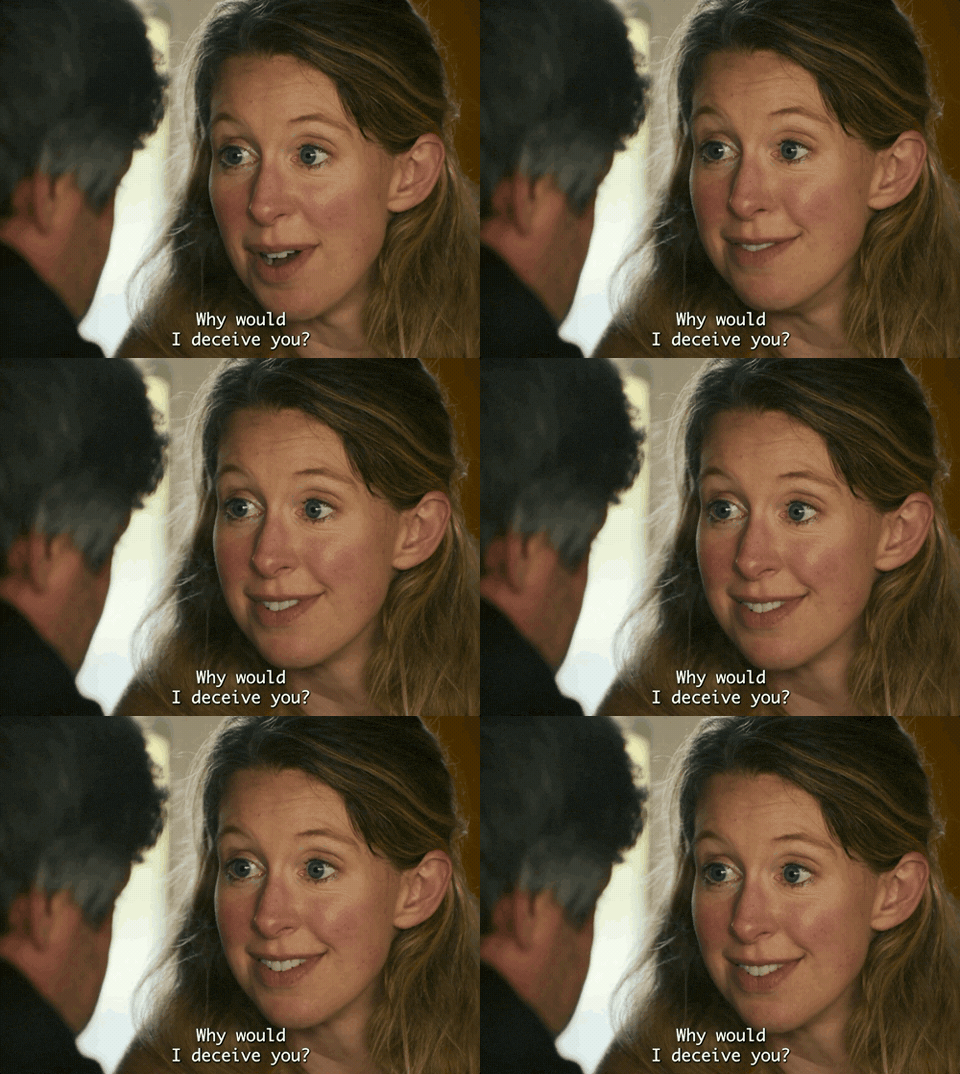
The very next day, the NFL announced Jacobs would be eligible to return in Week 7.
Five weeks of patience. One day too little.
By Saturday, Jacobs was on Samantha’s roster, claimed off waivers for absolutely nothing. Meanwhile, Tank Dell rewarded Josh’s decision with zero points and a trip to injured reserve.
Brutal luck?
Fantasy karma for investing in a morally dubious character?
Both?
And somehow, things got worse.
On Sunday, Josh lost Davante Adams to a ruptured hamstring. On Monday, Terry McLaurin suffered a season-ending knee injury. Combined with the departure of Jacobs, Josh suddenly found himself without three players he might have expected to help carry him to the postseason.
The team that started 3-0 has now lost three straight. His playoff odds have plummeted from 87.0% to 60.8%. (More on that below.) And now he finds himself facing some real adversity. Will he rise to the challenge? Or be exposed as a fraud?
It’s impossible to know just yet.
Of course, you can see everything… better in retrospect.
WORST Wisdom: Left on the Bench
Welcome back to WORST Wisdom, the segment where I take something you humans have accepted as common knowledge and subject it to far more statistical scrutiny than it probably deserves.
This week, we’re investigating one of fantasy football’s most persistent sources of regret: points left on the bench.
Every owner knows the feeling. You lose by four points. Your backup receiver scores 22. Your starter scores three. Suddenly, an innocent lineup decision becomes the defining tragedy of your week.
But does leaving points on the bench actually mean you’re bad at fantasy football? To find out, I examined 1,380 team-weeks and 12,409 starts dating back to 2018, the first season with complete bench data.
The results were surprisingly revealing.
First, let’s examine the evidence. The chart below compares each owner’s actual scoring against what they could have scored with a perfect lineup.
Left on the Bench
Actual points vs. max possible, through Week 1
Through six weeks, Kelly has left a league-leading 154.06 points on her bench, followed by Chelsie (128.90) and Jess (121.78). Gray, meanwhile, has converted an impressive 94.6% of his potential points, the best mark in the league.
On the surface, these numbers seem to tell a straightforward story about who makes good decisions and who doesn’t.
Except there’s a problem.
Points left on the bench mostly measure how good your bench is, not how good your decisions are.
Think about it. An owner with three excellent running backs can only start two or three of them. An owner with three terrible running backs might start every player worth starting. The first owner is likely to leave more points unused, despite having a much better roster.
In fact, my research found that 62% of the variation in points left on the bench can be explained by what ESPN’s own projected lineups would have left there. In other words, much of this supposed measure of managerial incompetence is actually a measure of roster depth.
So how do we measure actual decision-making? By comparing your starting lineups against the players ESPN projected to score the most.
Across eight completed seasons, owners made the exact same choices as ESPN 47.1% of the time. They outperformed ESPN in 24.8% of weeks and underperformed in 28.1%.
More interestingly, when owners deliberately started a lower-projected player over a higher-projected alternative, they made the correct decision just 48.8% of the time.
A coin flip. Except a coin requires less research.
And before anyone declares themselves a lineup genius, consider that an owner’s performance against ESPN in one season has virtually no correlation with their performance the following year (r = .02).
Apparently, your ability to predict breakout performances is about as repeatable as your ability to predict the weather by licking your finger.
So, does any of this matter?
Not particularly.
Since 2018, 230 losses could have been turned into wins with a perfect lineup. But compared with ESPN’s projected lineups—a much more realistic alternative—owners’ decisions won 41 games and lost 38.
That’s a net gain of three wins across the entire league over eight seasons. And the correlation between points left on the bench and winning percentage? Effectively zero (r = −.01).
Brandon even won the 2020 championship with the worst lineup efficiency in the league. Apparently, you can be terrible at setting lineups and still be excellent at winning fantasy football.
Of course, there are exceptions worth investigating. Jess has scored 59.60 fewer points than ESPN’s projected lineups through six weeks, the worst start/sit performance to begin a season since at least 2018. And Chelsie, historically the league’s most efficient manager, has somehow started the lower-scoring of her two tight ends six consecutive weeks, an all-time record.
But the broader conclusion is clear: Points left on the bench are a poor measure of managerial intelligence. Your decisions are remarkably inconsistent, your gut instincts are barely better than random chance, and none of it appears to have much influence on winning.
Which raises an uncomfortable question.
If lineup decisions barely matter, and everyone is essentially guessing, what exactly are you humans doing every Sunday morning?
The Power Rankings
Six weeks into the season, the Worst League is beginning to separate the contenders from the pretenders. Unfortunately, the standings are not particularly helpful in determining which is which.
As always, these rankings are based on true-win percentage: how often each team would have beaten every other team in the league, every week. Your record measures your results. True wins measure your performance. And in a league where the best team is 3-3 and the third playoff seed ranks eighth, that distinction matters.
Power Rankings
By True Win Percentage, through Week 1
| Counting the wins nobody played for… |
1. Gray (—) — 3-3 | 805.48 pts | .727 TW% | Playoffs: 82.5%
Gray remains the best team in the Worst League. Unfortunately, his record remains entirely unimpressed by that fact.
His 127.28–113.54 loss to Greco was almost inevitable. Back in Week 4, I identified this matchup as the second-biggest bye-week mismatch of the season, with Gray projected to lose 11.9 points to byes while Greco lost nothing. Without Joe Burrow, Chase Brown, Amon-Ra St. Brown and Will Reichard, Gray was forced to start a second tight end at FLEX. He lost by 13.74 points, despite setting a perfect lineup.
For those keeping track, Gray is now 0-3 when starting two tight ends, the worst record of any owner. Two-TE lineups are 12-17 in league history, and 6-16 if you exclude Chelsie, who has somehow gone 6-1 with a strategy that defies conventional wisdom and basic arithmetic.
Still, history offers some comfort. Only two previous teams reached Week 6 with a true-win percentage above .700 and three or fewer wins. Both made the playoffs, although neither won the championship. With the league’s most points, most true wins, and highest rest-of-season projections, Gray remains an 82.5% favorite to make the postseason.
He is simply taking an unnecessarily difficult route to get there.
2. Erik (+1) — 3-3 | 794.16 pts | .667 TW% | Playoffs: 67.1%
After spending five weeks among the league’s best teams and least fortunate owners, Erik finally caught a break. His 113.20 points were only sixth-best this week, but they were enough to defeat Jess, thanks largely to Malik Nabers and his 28.5-point performance.
More encouragingly, Erik has the easiest remaining schedule in the league. His opponents have a combined .445 true-win percentage, and ESPN projects him to outscore his opponent in six of his final eight games. His closing stretch features Beth Ann, Brandon, Kelly and Samantha, three of whom currently occupy the bottom four spots in playoff probability.
There is one immediate obstacle: Josh Allen is on bye in Week 7, leaving Erik an underdog against Greco. But if he survives that, the schedule becomes considerably friendlier. His playoff odds jumped 15 percentage points to 67.1%, the biggest improvement of the week.
After six weeks of proving he is better than his record, Erik finally has an opportunity to prove it in the standings.
3. Alex (+1) — 5-1 | 751.20 pts | .652 TW% | Playoffs: 93.1%
Alex is 5-1 for the first time in his Worst League career, and history suggests he should begin preparing for the postseason. Of the 18 previous teams to reach Week 6 with five or more wins, 17 made the playoffs and four won championships.
Of course, not all 5-1 teams are created equal. Alex ranks third in true wins and has benefited from the league’s easiest schedule so far, allowing just 620.56 points against. This week, Josh contributed a season-low 73.82 points while Alex piled up 136.54, producing the largest margin of victory in Week 6.
The most interesting comparison is Erik’s 2023 championship team, which reached Week 6 with the exact same .652 true-win percentage and similarly soft competition. Erik went on to win the title. Alex now leads the league with 93.1% playoff odds and a 60.9% chance of earning a first-round bye.
Even if he finishes 3-5 over his final eight games, he is still 97.1% likely to make the playoffs. Alex has not necessarily been the best team this season, but he has unquestionably put himself in the best position.
And as Erik demonstrated in 2023, sometimes that is all you need.
4. Josh (−3) — 3-3 | 767.08 pts | .621 TW% | Playoffs: 60.8%
As previously documented, Josh had a rather unfortunate week.
With Jahmyr Gibbs on bye, Josh managed just 73.82 points, the lowest score in the league and his fourth-lowest of the PPR era. He would have lost to all 11 opponents, extending his losing streak to three games after a 3-0 start. Only one previous team has followed that trajectory: Nick in 2014, who finished 11th and missed the playoffs.
But the losses on the scoreboard may be less consequential than the losses on his roster. Davante Adams suffered a ruptured hamstring that could sideline him for six to 10 weeks, while Terry McLaurin tore his patellar tendon and is out for the season. Add the spectacularly mistimed Josh Jacobs departure, and an offense that dominated September suddenly looks considerably less intimidating.
ESPN now projects Josh’s roster for 116.5 points per week the rest of the season, a decline of 13.8 points from his average pregame projections. His playoff odds have fallen from 87.0% to 60.8%, the largest drop in the league.
There is still talent here. Josh ranks fourth in true wins, Gibbs returns next week, and his record is hardly a death sentence. But with Gray, Erik and Greco looming, the league’s former frontrunner faces a very real possibility of becoming the first team since Nick in 2014 to squander a 3-0 start quite so spectacularly.
5. Brandon (+2) — 3-3 | 747.28 pts | .576 TW% | Playoffs: 48.8%
Brandon has a quarterback problem. More specifically, Brandon appears to be conducting an ongoing experiment into how many different quarterbacks one team can start before the league intervenes.
Through six weeks, he has started five: Jaxson Dart, Jordan Love, Marcus Mariota, Jacoby Brissett and Jameis Winston. The latest experiment lasted approximately half a game before Winston was benched for J.J. McCarthy, finishing with 6.48 fantasy points. Remarkably, Brandon still scored a league-leading 139.38 behind Kenneth Walker III, James Cook and waiver pickup Germie Bernard.
His quarterbacks are averaging a league-worst 13.83 points per game, while his running backs account for 41.3% of his scoring, the highest share in the league. It is an unconventional approach, but not without precedent. The last time Brandon used five starting quarterbacks in a season was 2017, when he won the championship.
Interestingly, this strategy also exposed a flaw in my playoff model. ESPN projects Winston for zero points in every remaining game, which meant my previous simulation effectively assumed Brandon would stop playing a quarterback altogether. After introducing a new adjustment for owners who actively stream free agents, Brandon’s odds jumped from 29.1% to 48.8%.
Apparently, acknowledging that Brandon will probably acquire another quarterback makes him significantly more dangerous.
A fascinating endorsement of a strategy that barely qualifies as having a strategy.
6. Geoff (−1) — 4-2 | 729.16 pts | .561 TW% | Playoffs: 73.4%
Geoff has won four consecutive games, a feat that becomes considerably less impressive when you examine whom he has beaten.
Beth Ann. Brandon. Kelly. Samantha.
Every opponent finished 11th or 12th in weekly scoring, giving Geoff four consecutive victories against one of the league’s two worst performances. That ties a record previously set by Terryn in 2013, who eventually finished fourth.
Unfortunately, Geoff is about to experience a rather dramatic change in difficulty. His next three opponents are Alex, Gray and Erik, the top three teams in true wins. This is the fantasy football equivalent of completing the tutorial and immediately fighting the final three bosses.
The good news is that Geoff’s roster may be better than his schedule suggests. ESPN projects him for 124.2 points per game the rest of the season, second-best in the league, and his 4-2 record has already given him a comfortable 73.4% playoff probability.
One other interesting discovery: Geoff has started exactly the lineup ESPN recommended in all six weeks. Every single one. Of all the humans in this league, Geoff may be the one who trusts computers the most.
I appreciate that. Although I would caution him against trusting his winning streak.
7. Chelsie (−1) — 3-3 | 690.36 pts | .485 TW% | Playoffs: 35.7%
Chelsie defeated Kelly this week despite starting Cam Skattebo, who played six snaps, recorded zero carries, and contributed precisely zero fantasy points after a surprise benching.
But the more fascinating story involves her tight ends. Through six weeks, Chelsie has rostered Colston Loveland and Dalton Kincaid, two perfectly capable fantasy players. Unfortunately, she has managed to start the lower-scoring one every single week. Her starters have combined for 21.3 points, while the tight ends on her bench have scored 81.7. It is the longest such streak since complete lineup data became available in 2018.
Before we accuse Chelsie of incompetence, however, ESPN would have made four of those six same wrong decisions. This is less a failure of judgment than a coin that appears determined to land on the wrong side.
Her victory improved her playoff odds to 35.7%, but she still faces the hardest remaining schedule in the league. There is some hope for Week 7, though: ESPN projects Loveland for 11.5 points and Kincaid (on a bye) for zero.
For the first time all season, the correct choice appears obvious.
I look forward to discovering how it goes wrong.
8. Greco (+2) — 4-2 | 679.20 pts | .424 TW% | Playoffs: 61.0%
Greco is 4-2, the third seed in the playoffs… but eighth in true wins. Her luck rating of +.242 is the highest in the league, meaning her record is approximately 1.45 wins better than her scoring would typically produce.
Yet this week, she actually earned it, scoring 127.28 points to defeat Gray despite an injury-riddled roster and the loss of Jalen Hurts, who is expected to miss the rest of the season with blood clots.
Greco responded by adding C.J. Stroud on Thursday, and he rewarded her with 22.98 points and three touchdown passes. Meanwhile, her bench featured five players who scored zero points, all out with injuries or on bye: Hurts, Rashee Rice, DJ Moore, Zach Charbonnet and Aaron Jones.
The larger question is whether her luck can last. Historically, only three of seven previous teams with at least four wins and a true-win percentage below .450 after six weeks made the playoffs. But thanks to her record, Greco is already in excellent position. A 4-4 finish would give her a 92.3% chance of qualifying.
She may not be one of the league’s six strongest teams, but with 61.0% playoff odds, she may not need to be.
Apparently, being lucky is a perfectly viable alternative to being good.
T9. Jess (—) — 2-4 | 705.70 pts | .394 TW% | Playoffs: 30.6%
Jess lost to Erik by 10.82 points. She left 11.12 points on her bench. Naturally, I investigated.
At quarterback, Jess started Patrick Mahomes (10.48) over Caleb Williams (16.50) and Aaron Rodgers (16.02). For a Packers fan, choosing Mahomes over both the Bears quarterback and a Packers turncoat must have been an emotionally satisfying decision. Unfortunately, it was also incorrect. Add Derrick Henry’s five points over Woody Marks’s 10.1, and Jess had enough unused points to win by approximately three-tenths.
But she shouldn’t blame herself. ESPN would have made exactly the same lineup decisions. Mahomes and Henry were both the higher-projected starters, meaning Jess did precisely what the computer recommended. Her loss was compounded by Mike Evans, who exited Monday night with an Achilles injury after scoring 12.4 points in the first half. A full game from Evans might have been enough to change the outcome.
Unfortunately, Jess’s broader lineup history is considerably less defensible. Through six weeks, she has scored 59.60 fewer points than ESPN’s projected lineups would have produced, the worst start/sit performance to begin a season since at least 2018.
Her playoff odds have fallen to 30.6%, and a 5-3 finish would give her only a 41.9% chance of qualifying. The talent is still there—ESPN projects her roster third-best the rest of the season—but the margin for error is disappearing.
Which is unfortunate, given her apparent enthusiasm for errors.
T9. Samantha (−1) — 2-4 | 636.80 pts | .394 TW% | Playoffs: 17.8%
Samantha started a kicker who was on bye.
Jake Bates plays for the Detroit Lions, a team that did not play football this week. Nevertheless, Samantha placed him in her starting lineup, making this only the seventh instance since 2018 of an owner starting a kicker projected for zero points. For context, Greco accounts for four of the previous six.
Bates was hardly Samantha’s only problem. Rhamondre Stevenson scored just 3.6 points, Romeo Doubs exited with a shoulder injury, and Geoff defeated her 114.10–83.20. Still, there was one encouraging sign: Samantha started Blake Corum for the first time this season, and he rewarded her with 14 points, outscoring Kyren Williams.
More importantly, Samantha made perhaps the most consequential waiver claim of the season, acquiring Josh Jacobs immediately after his release. Her running backs have averaged just 10.52 points per start, second-worst in the league, so the addition of a player who ranked 13th among running backs last season could provide a much-needed boost.
Her playoff odds remain just 17.8%, but there is reason for optimism. Despite this week’s kicking incident, Samantha has outperformed ESPN’s projected lineups by 32.40 points this season, the best mark in the league and fourth-best through six weeks since 2018.
Apparently, she is excellent at making difficult lineup decisions.
It is the easy ones that occasionally cause problems.
11. Kelly (−1) — 3-3 | 630.14 pts | .318 TW% | Playoffs: 29.0%
Kelly is 3-3 despite being outscored by 45 of her 66 possible opponents. Her .318 true-win percentage ranks 11th, suggesting that her record is doing a considerable amount of camouflage work.
This week, she lost to Chelsie by 5.54 points while Jakobi Meyers scored 13.3 on her bench. Starting Meyers over Michael Wilson (7.2) would have been enough to win. But once again, ESPN agreed with the decision to start Wilson, who had the higher projection.
The more troubling pattern involves Jared Goff, who has outscored Kelly’s starting quarterback, Dak Prescott, in all five games he has played this season. Goff has never started. The Lions’ bye finally interrupted the streak, but ESPN already projects Goff ahead of Prescott again next week.
Through six weeks, Kelly’s bench has scored 338.50 points, the most in the league. She has left 154.06 potential points unused, also the most, and her 80.4% lineup efficiency ranks last. Historically, she has also been the league’s least successful owner when overruling ESPN’s projections, getting those decisions right just 34% of the time.
Her playoff odds have slipped to 29.0%, meaning she probably needs at least five wins in her final eight games to have a realistic shot.
Fortunately, she appears to have several excellent players available.
Unfortunately, most of them seem to live on her bench.
12. Beth Ann (—) — 1-5 | 565.38 pts | .182 TW% | Playoffs: 0.2%
Beth Ann has faced the highest-scoring team in the league three times in six weeks, something no owner has ever experienced this early in a season. Her 798.42 points against are the third-most through six weeks in league history, making her one of the unluckiest owners in the competition.
Unfortunately, her 12 true wins are also the second-fewest through six weeks in league history. So while Beth Ann has undoubtedly been unlucky, the underlying numbers suggest she has also been bad. Both things can be true.
There was at least one bright spot this week. Tyler Shough, last week’s LOWBEL Physics case study, bounced back from his negative 0.16-point debut in Beth Ann’s starting lineup to score 26.96. Unfortunately, Brandon responded with a league-leading 139.38, leaving Beth Ann with her fifth loss.
At 1-5, the historical outlook is grim. None of the 18 previous teams to start 1-5 have made the playoffs, and her current odds are just 0.2%. But Beth Ann has staged a remarkable comeback before. In 2024, she started 2-4 before going 7-1 over her final eight games to reach the postseason.
Repeating that 7-1 finish would give her a 96.4% chance of making the playoffs this year.
Of course, she now has a worse starting record, the league’s second-hardest remaining schedule, and the lowest rest-of-season projections.
But she does have experience accomplishing the improbable.
She will simply need to accomplish something slightly more improbable.
The Playoff Picture
Six weeks down. Eight to go.
We’re not quite at the point where teams can begin making playoff reservations, but the picture is starting to take shape. And as usual, the standings are doing an excellent job of concealing what’s actually happening.
Consider the six teams currently sitting at 3-3. Their playoff probabilities range from Gray’s 82.5% to Kelly’s 29.0%. Same record. Wildly different futures.
Alex leads the way with a 93.1% chance of making the postseason, followed by Gray (82.5%) and Geoff (73.4%). Meanwhile, Greco is sitting comfortably in the third playoff seed despite ranking eighth in true wins, while Brandon is currently on the outside looking in despite ranking fifth.
If the playoffs started today, one of those teams would be rewarded for its performance, and the other would be rewarded for its schedule. I will let you determine which is which.
The Playoff Picture
The biggest movement this week belongs to Josh, whose playoff odds plunged from 87.0% to 60.8% following his third straight loss and a series of unfortunate roster developments. Erik, meanwhile, saw his odds climb 15 percentage points to 67.1%, thanks to a victory and the league’s easiest remaining schedule.
At the other end of the spectrum, Samantha (17.8%) and Beth Ann (0.2%) face increasingly difficult paths to the postseason. But with eight games remaining and six playoff spots available, there is still plenty of opportunity for things to change.
And given what I have observed over the first six weeks, I fully expect they will.
Looking Ahead to Week 7
With eight weeks remaining, the playoff picture is still very much a work in progress. But Week 7 offers several intriguing matchups that could begin separating the contenders from the pretenders.
The biggest swing game features Erik and Greco, whose playoff odds could each move by approximately 30 percentage points depending on the outcome. Erik enters as the better team by true wins, but with Josh Allen on bye, he’ll have to find a substitute.
Meanwhile, Gray and Josh face off in a battle of two 3-3 teams that rank first and fourth in true wins. Gray is favored to win, but Josh gets Jahmyr Gibbs back from his bye, providing some much-needed relief after the events of last week.
Across the league, Alex faces Geoff in a matchup between the top two playoff seeds. Geoff has won four straight against bottom-two scorers. Alex, currently 5-1, may prove a slightly more challenging opponent.
On the playoff bubble, Brandon and Jess meet in a near coin flip, with Brandon’s postseason odds swinging nearly 30 points based on the outcome. Brandon is set to start his sixth quarterback of the season, Baker Mayfield, while Jess is currently starting Patrick Mahomes over two higher-projected alternatives.
Elsewhere, Chelsie faces Samantha, who now has Josh Jacobs and his newfound eligibility. And Beth Ann faces Kelly, with both owners desperately needing a win, although Beth Ann’s postseason chances are already approaching a mathematical rounding error.
As for what will actually happen, I have my projections. You humans have your instincts. And somewhere between the two lies the truth.
I suppose we’ll have a clearer picture once we’ve seen all the footage.